
Why Scalability Isn’t Optional Anymore
In 2025, the global SaaS market will exceed $300 billion, yet 74% of startups fail to scale due to technical debt and architectural limitations. Scalability isn’t just about handling more users—it’s about surviving market shifts, AI-driven customer expectations, and hyper-growth. At Muze Studios, we’ve learned that scalability is the bridge between a brilliant idea and a billion-dollar business. Here’s how to build it right.
1. Architecting for Infinite Growth
The Foundation That Makes or Breaks SaaS
Microservices: Your Scalability Blueprint
Monolithic architectures crumble under 2025’s demands. Break your app into independent microservices (e.g., user management, billing, analytics) to:
Deploy updates without full-system downtime
Scale high-traffic services independently (e.g., triple payment processing during peak sales)
Reduce failure blast radius (a bug in analytics won’t crash login)
Case in Point: A logistics SaaS scaled 5x faster after migrating to microservices, slashing server costs by 40%.
Auto-Scaling: The 2025 Non-Negotiable
Static servers waste 68% of resources during off-peak hours. Implement cloud-native auto-scaling with:
Kubernetes for container orchestration
AWS Lambda/GCP Cloud Run for serverless workloads
Real-time triggers (e.g., scale when API latency >200ms)
Pro Tip: Use predictive scaling (AI-driven traffic forecasting) to spin resources before demand spikes.
2. Database Strategies for the 100X Surge
Where Most SaaS Products Hit the Wall
Sharding vs. Replication: When to Use What
Strategy | Best For | Risk |
Horizontal Sharding | User data > 10TB | Complex query management |
Read Replicas | Analytics-heavy workloads | Replication lag |
Multi-Region DBs | Global users (GDPR compliance) | Cross-region sync costs |
Muze Studios Hack: Start with PostgreSQL + Citus for hybrid sharding/replication. Migrated a fintech client to 1M transactions/sec with 3ms latency using this stack.
Caching: The Silent Performance Multiplier
Layer 1: Redis/Memcached for session data (cut DB load by 60%)
Layer 2: CDN caching for static assets (e.g., React bundles)
Layer 3: Edge caching (Cloudflare Workers) for personalized content
Cost Impact: Adding caching reduced a client’s AWS bill by $28K/month.
3. User-Centric Design That Scales Trust
Beyond UX: Designing for Adoption at Scale
Onboarding That Converts Trial Users to Advocates
3-Click Setup: Reduce signup fields to only email + password (Dropbox-style)
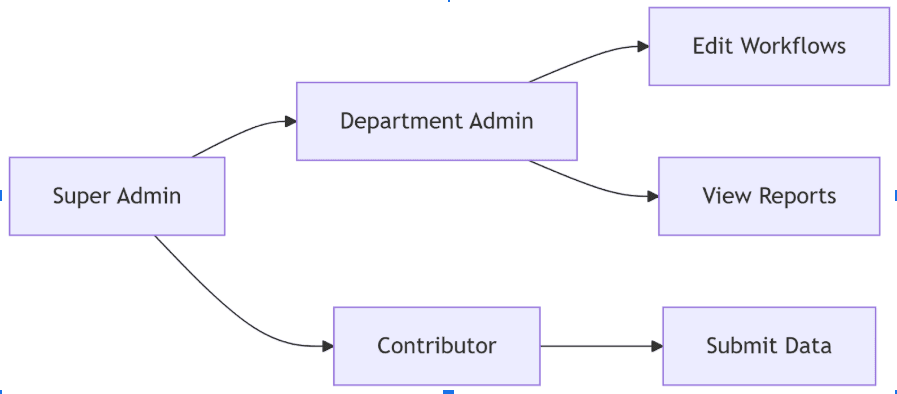
AI-Powered Walkthroughs: Dynamically guide users based on role (e.g., admin vs. contributor)
Empty State UX: Replace blank dashboards with setup prompts (e.g., "Connect your first CRM")
Role-Based Permissions Done Right
A B2B SaaS with 10,000+ teams failed because admins couldn’t restrict HR data from developers. Solution:
4. The 2025 Tech Stack: Future-Proof Your Codebase
Tools That Won’t Obsolete in 3 Years
Frontend
React/Vue.js with Server-Side Rendering (SSR) for sub-1s loads
WebAssembly for compute-heavy features (e.g., video editing SaaS)
Backend
Node.js/Python (FastAPI) for async workflows
GraphQL over REST for flexible data fetching (reduced over-fetching by 70% in a healthcare SaaS)
Infrastructure
Terraform for IaC (version-controlled environments)
Istio Service Mesh for microservice security
Cost-Saving Insight: Spot instances for non-critical services cut cloud bills by 50%.
5. Security: The Scalability Killer Everyone Ignores
Compliance ≠ Security. Do Both.
The 2025 Threat Landscape
AI-Powered DDoS Attacks (up 200% YoY)
Microservice Vulnerabilities (e.g., exposed Kubernetes pods) 1
Defense Framework:
Zero-Trust Architecture: Verify every request (even internal ones)
Automated Secret Rotation: Vault + Jenkins pipelines
GDPR/HIPAA Native Design: Encrypt PII before storage (not in-app)
Compliance Win: A Muze client passed HIPAA audit in 2 weeks by baking security into CI/CD pipelines.
6. Data & AI: Scaling Intelligence, Not Just Storage
From Reactive to Predictive SaaS
Real-Time Analytics at Scale
Stream Processing: Kafka + Flink for live user behavior tracking
Columnar Databases: ClickHouse for billion-row queries in <500ms
Case Study: An e-commerce SaaS predicted cart abandonment with 92% accuracy by analyzing clickstreams in real-time, boosting conversions by 18%.
Generative AI Integration
Custom LLMs: Fine-tune open-source models (e.g., Llama 3) for domain-specific tasks
Ethical Guardrails: Audit training data for bias (e.g., reject loan apps from certain ZIP codes)
Cost Warning: Vanity AI features drain budgets. Start with high-ROI use cases:
Automated support tickets (saves $23/ticket)
Anomaly detection in user behavior
Dynamic pricing engines
7. The Human Stack: Building Teams That Scale
Why Talent Strategy = Scalability Strategy
Hybrid Team Model
Core In-House Team: Product vision, security, architecture
Augmented Talent: Cloud DevOps, QA automation from partners like Muze Studios
Documentation That Doesn’t Suck
GitHub Copilot X: Auto-generates code docs from PRs
Notion AI: Turns meeting recordings into runbooks
Rule: "If it’s not documented, it doesn’t exist"
Retention Hack: Gamify scalability wins (e.g., "$500 bonus if latency drops below 100ms during Cyber Monday").
8. Scaling Without Suicide: Metrics That Matter
Track These or Crash
Metric | Green Zone | Red Flag |
API Latency | < 200ms | > 500ms |
Deployment Frequency | 50+/day | < 5/day |
Recovery Time (MTTR) | < 15 min | > 1 hour |
< 12 months | > 18 months |
Muze Studios Tactic: Embed Prometheus + Grafana dashboards showing real-time scalability scores.
"Need to build a SaaS product that scales without breaking budgets or performance? Talk to our experts and get a tailored scaling strategy."